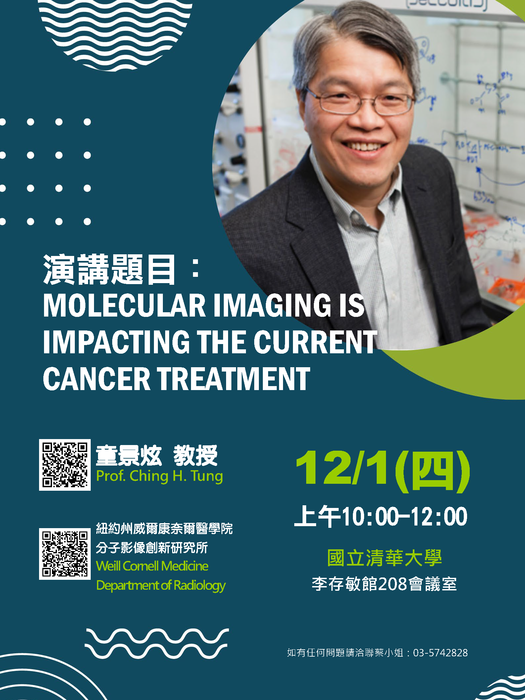
Topic:
Molecular imaging is impacting the current cancer treatment
Abstract
Over the past two decades, a few FDA approved molecular imaging probes, which report biological abnormity of cancerous tissue, have played critical roles in cancer management. For example, 18 F-FDG PET/CT imaging is widely used to detect tumor, trace metastasis, and evaluate therapeutic outcome. Although the number of approved molecular imaging probes is still low, many promising candidates are on the horizon.
These novel probes are specifically designed, based on various mechanisms, to image cancer-associated biomarkers, metabolites, enzymatic activity, and microenvironment.
Their imaging signals acquired non-invasively reflect the status of the target-of-interests in the native tumor microenvironment in whole body. The gathered real-time biological information, which is not available in the past, is expected to revolutionize the current treatment strategies. This seminar will briefly introduce the existing and potential applications of molecular imaging in tumor detection, treatment planning, treatment evaluation, real time surgical guidance and drug development. The obstacles of translating these unconventional molecular imaging probes into clinical practice will also be discussed.